| Missing the Mark |
|
|
|
| Written by NutriSearch |
| Wednesday, 24 June 2009 23:36 |
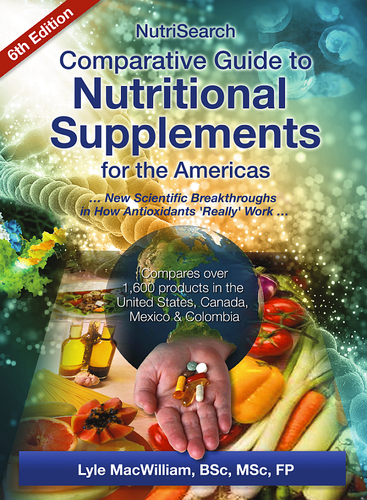
Missing the MarkIn 2001, Melaleuca posted a document on their web site to convince their distributor base that the Comparative Guide to Nutritional Supplements was inaccurate. Readers asked us for a rebuttal to this document, which includes several misleading statements intended to discredit our work. While we respect Melaleuca's right to their own opinion, we do not condone their personal attack on the author of the Comparative Guide to Nutritional Supplements. Neither can we agree with their attempts to show bias, when in fact the Blended Standard used to rate the products contained in the third edition of the guide was developed specifically to avoid any potential bias, using the published recommendations for supplementation of independent, internationally-recognized authorities on health and nutrition. Eight years ago, Melaleuca wrote a critique of the second edition of the Comparative Guide to Nutritional Supplements. More than seven years after the guide went out of print this diatribe continues to be circulated. The objective of this paper is to clarify a few key points.In 2002, Melaleuca, a manufacturer of dietary supplements, disseminated though its distributorship and posted on its web site a critique of the Comparative Guide to Nutritional Supplements (2nd edition). That edition of the guide went out of print in the fall of 2002 with the launch of the third edition of the Comparative Guide. The third edition of the Comparative Guide, itself now long in the tooth after almost four years in print, was significantly enhanced, based on input from the public, from sources within the dietary supplement industry—including Melaleuca—and from evolving scientific evidence. Nevertheless, Melaleuca persists in disseminating their critique, written to address perceived deficiencies in the second edition of the Comparative Guide, to attack the third edition of our guide—with the full knowledge that their concerns have no currency. NutriSearch Corporation now owns the copyright to the Comparative Guide to Nutritional Supplements. The fourth edition, scheduled for release in the spring of 2007, will further enhance our comparisons, again based on feedback from the industry, from consumers, and from recent scientific findings. We have always welcomed constructive criticism of our analytical model, and, where appropriate, will seriously consider such criticism when modifying and improving our analysis for future editions of our work. On that note, while we thank Melaleuca for taking the time to critique our work, we believe that some of this company’s public remarks go well beyond fair comment. Misrepresentations of the facts and personal attacks on the guide’s principal author, Lyle MacWilliam, have no place in objective criticism. Indeed, some of the comments in the Melaleuca document indicate that the anonymous authors of the critique either did not read the Comparative Guide to Nutritional Supplements in full or that they failed to understand what they were reading. GMP complianceMelaleuca claims: “MacWilliam begins by attacking the quality control processes of supplement producers.”
Our efforts to find information on the GMP that Melaleuca claims to follow have been frustrating. A 2006 search of the Melaleuca web site and an online Google search reveal a single document alluding to quality standards. This documents talks about the company’s use of natural products, but makes no mention of GMP compliance. It also mentions Melaleuca’s Quality Assurance lab, but does not indicate whether this lab is “in-house” or an outside agent, or whether it meets quality and calibration standards set out by the International Standards Organization for laboratory procedures (ISO 17025). Most companies that meet national or international standards prominently display their certifications. Melaleuca’s silence on GMP compliance and quality standards, combined with the outsourcing of the manufacture of their dietary supplements, raises concern regarding their ability to assure finished product quality.
SafetyMelaleuca Claims: “MacWilliam goes on to attack the quality, purity and composition of all supplements … to back up his argument he has to go back to the beginning of the last century.” Fact: Many U.S. studies have shown discrepancies between what is on the label and what is in the bottle. The study alluded to by Melaleuca, conducted in 1991, includes data from as far back as 1908. Moreover,
Consumerlab.com, a U.S.-based testing facility for dietary supplements, recently completed a study of 47 nutritional supplements and found that eleven U.S. multivitamin products—almost 25% of the products tested—failed their quality control tests. A number of the products were significantly short in the amount of important vitamins or minerals. Some contained too much lead and another failed to break apart properly for absorption. To review this report, log on to www.consumerlab.com.
Nutrient formsMelaleuca claims: MacWilliam “completely ignores the effect of nutrient forms and absorption rates in his analysis....” Fact: This statement is factually incorrect and completely disregards the section dealing with the creation of the second edition’s Nutrient Profile Score (Chapter 4, Comparative Guide to Nutritional Supplements, 2nd edition).
The scientific rationale for our expanded and improved third edition criteria are discussed in detail in chapters 5 through 16 of the Comparative Guide to Nutritional Supplements (3rd edition).
Unbiased sourcesMelaleuca claims: In the section of the Melaleuca critique titled, “Exactly Who Are These Experts?” Melaleuca contends that the four independent published nutritional authorities, whose recommendations for daily nutritional intake form the basis of the Blended Standard, are biased and that their recommendations “slant” the Blended Standard. Fact: Each of the four authorities cited have unquestionably excellent credentials and, as the anonymous Melaleuca authors contend, “… are knowledgeable. And all four are capable of providing advice on nutrition.” Even so, Melaleuca invests considerable space and ink trying to discredit them.
In the third edition of the Comparative Guide, the number of published authorities used to create the Blended Standard was increased to seven. The fourth edition of the guide, to be released in February, 2007, further expands the number of independently published authorities to twelve.
Improvements to the analysesNutriSearch Corporation continues to improve its comparisons and look for new ways to serve consumers. In the third edition of the Blended Standard, released early in 2003, several changes were made to the comparisons and to their presentation in the guide. These changes include the following:
Our upcoming fourth edition includes several additional changes that we are very excited about, based in part on consultation with the public and with nutritional supplement manufacturers. These include, for the first time, independent laboratory verification of product claims for our NutriSearch GOLD Medal of Achievement™ earners. Our comparative guides have always stressed that consumers need to look beyond the label information and verify that their chosen supplements meet quality standards. Our new NutriSearch Medal of Achievement Program™ allows us to provide independent verification of GMP compliance and product label claims. The author’s credentialsMr. MacWilliam is a trained biochemist and kinesiologist and a contributing author to leading health publications. He has served, at the behest of Canada’s Minister of Health, on an expert advisory team for natural health products, which developed a new regulatory framework to ensure Canadians have access to safe, effective and high quality nutritional products. His wide-ranging consulting experience includes work for the British Columbia Science Council, Environment Canada, Human Resources Development Canada, and Health Canada. He has been invited by companies, organizations and individuals around the world to speak on nutrition and lifestyle issues, including presentations on adults’ and children’s supplementation needs, the prevention of degenerative disease, and the need for lifestyle change to promote optimal health. Several leading nutritional manufacturers, including Douglas Laboratories, Cox R&D Laboratories, Source Naturals, TrueStar Health, USANA Health Sciences, and Vitamin Research Products, use our Comparative Guide to Nutritional Supplements in highlighting the quality of their products. We have been assured of the confidence with which these respected companies regard our research and analysis and the value that they place on the Comparative Guide to Nutritional Supplements as a consumer-based tool to help sort the wheat from the chaff. Neither the author, Lyle MacWilliam, MacWilliam Communications Inc., nor NutriSearch Corporation have any fiduciary ties to any of the companies or products listed in the Comparative Guide to Nutritional Supplements or its sister publications; nor do they profit in any way from the sale of nutritional products listed in the guide. In addition, production of the guide is not funded by any nutritional manufacturer or other public or private interest. The Comparative Guide to Nutritional Supplements is is the sole creative effort of the author and NutriSearch Corporation. |
| Last Updated on Thursday, 20 January 2011 21:19 |